Colombia's National Roads Institute (Invías), the agency that builds and maintains the national highways not run under concessions, plans a budget of about COP 5.8 trillion for 2027, backed by identified funding sources. It reported the figures on October 14, 2026, after presenting them to the Legal Accounts Committee, the House committee that reviews the national budget accounts.
The same report showed the starting point: as of September 30, Invías had executed 15% of its initial 2026 budget of COP 5.6 trillion. After adjustments with the Finance Ministry, execution rose to 21%, and the goal is to close the year at about 65%.
For 2027, the agency is prioritizing road maintenance, rehabilitation and upgrades, and it introduced the Caminos del Tigre (Tiger Roads) program, which aims to work on 30,000 kilometers of secondary and tertiary roads.
What is the Invías budget for 2027?
About COP 5.8 trillion. According to Invías, the plan seeks to meet the needs of the national road network, strengthen work on strategic corridors and boost the maintenance, rehabilitation and upgrading of regional roads. The statement does not break down how much will go to each program or corridor.
The point about funding sources matters. The review of the 2026 budget found about COP 1.13 trillion that had been added without an actual funding source, which was corrected with the Finance Ministry. The director general explained it this way:
“Together with the Finance Ministry, we corrected the 1.13 trillion pesos that had been wrongly budgeted without a source, and we are putting the National Roads Institute's finances in order.” Juan Camilo Ostos, Director General of Invías, October 14, 2026 (translated from Spanish).
How much of its 2026 budget has Invías executed?
As of September 30, Invías had executed 15% of its budget for the year; with the adjustments it reached 21%, and it is aiming for about 65% by year-end. The table summarizes the figures it presented:
| Indicator | Figure |
|---|---|
| Initial 2026 budget | COP 5.6 trillion |
| Execution as of September 30, 2026 | 15% |
| Execution after adjustments with the Finance Ministry | 21% |
| Expected execution with about COP 500 billion being secured | About 45% |
| Year-end 2026 target | About 65% |
| 2025 budget execution | Approximately 52.6% |
Budget reserves are commitments made in one year that remain to be paid in the next. Invías reported that its 2025 reserves totaled COP 2.4 trillion; 73% have now been executed, and the goal is to reach 95%.
What condition are Colombia's national roads in?
According to the Invías presentation, about 60% of the 11,600 kilometers of the national road network that were analyzed are in fair or poor condition. The agency cites this as a reason to prioritize projects and improve execution.
One example is the Briceño–Tunja–Sogamoso corridor, which carries more than 14,000 vehicles a day. Invías is inspecting the sections under its responsibility: from Villapinzón to the start of the Tunja bypass, and from La Y in Tibasosa through Nobsa to Sogamoso.
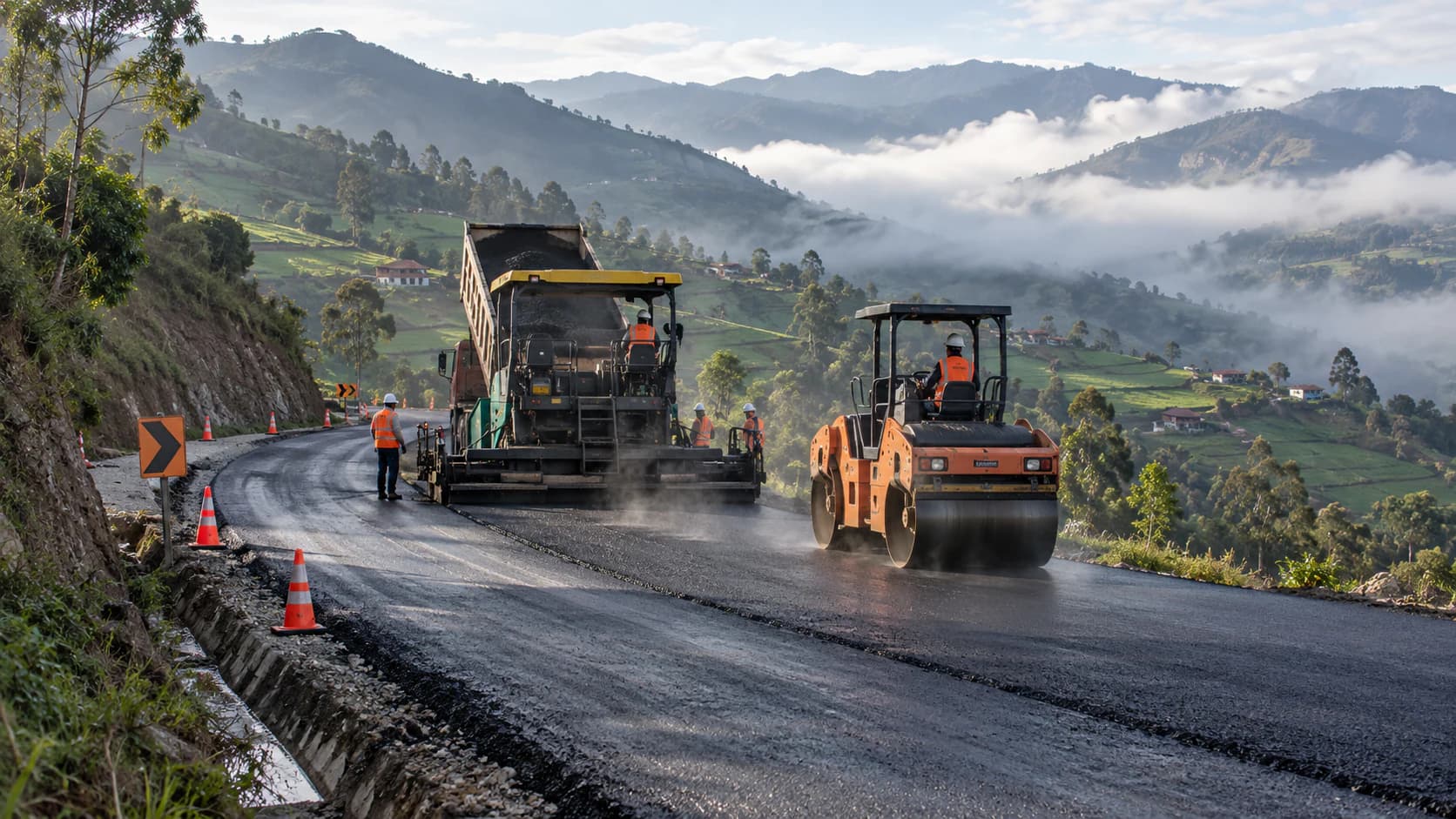
There, crews are replacing the wearing course, the top layer of the pavement that is in contact with the tires; doing patch repairs; and maintaining road signs. Invías is also structuring a four-year program of full rehabilitation and deep periodic maintenance.
What is Caminos del Tigre, and what happens to tertiary roads?
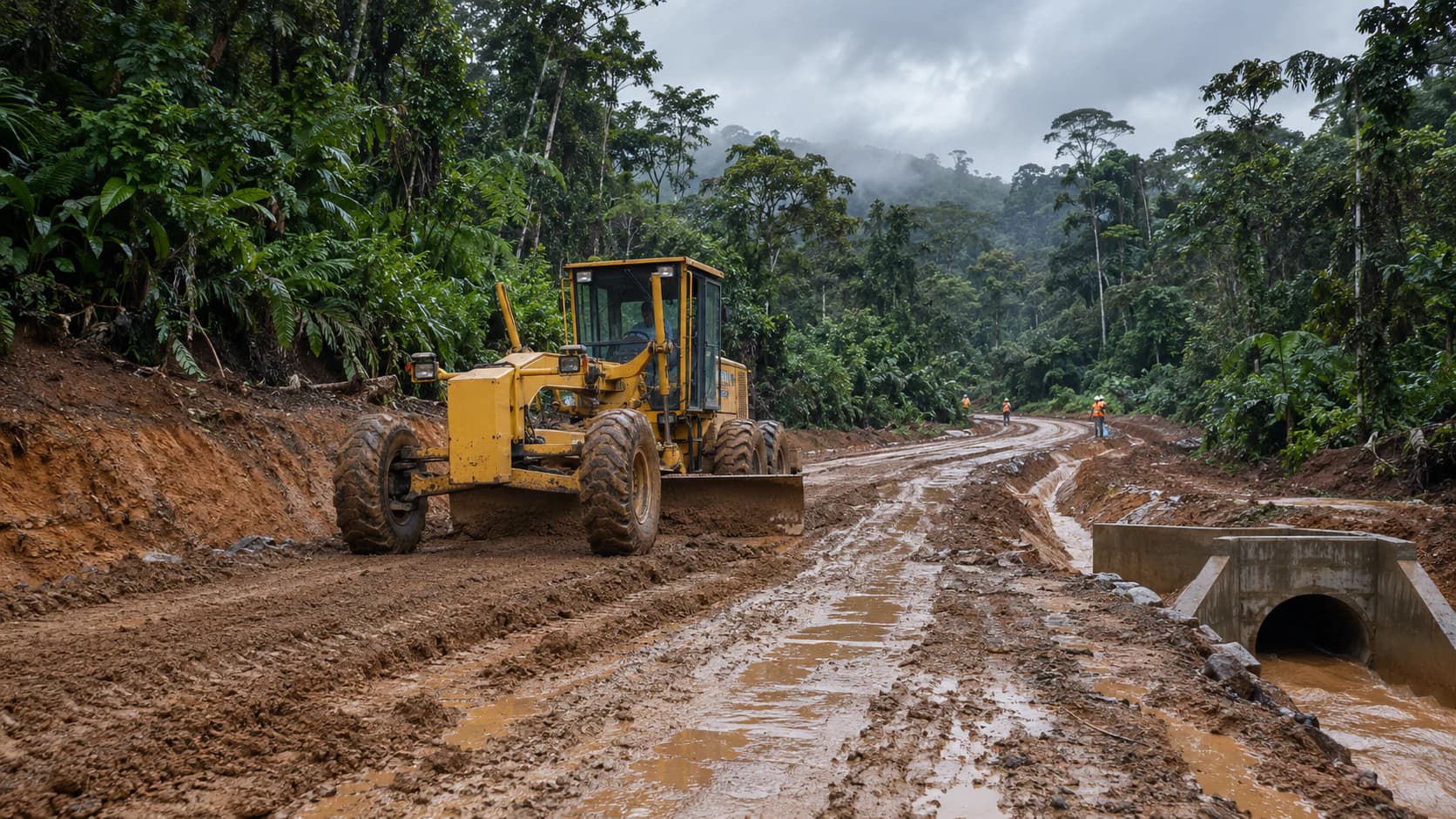
Caminos del Tigre is the program through which Invías aims to work on 30,000 kilometers of secondary and tertiary roads through maintenance, rehabilitation and construction. It launched on October 16 in the department of Chocó, during a technical visit with the Colombian Chamber of Infrastructure (CCI), the industry's trade association.
During that visit, officials traveled roads connecting Istmina, Nóvita and Puerto Meluk. The Chocó departmental government lists the Nóvita–Las Ánimas–Quibdó, Nóvita–San José del Palmar and Istmina–Pie de Pepé–Puerto Meluk sections as having critical points.
The new program replaces Caminos Comunitarios para la Paz (Community Roads for Peace). According to Ostos, that program planned 33,000 kilometers of tertiary roads, but only about 4,000 received work, so Invías is closing it out. The official October 14 statement does not include a timeline for that process.
What are primary, secondary and tertiary roads?
- First order: they link the country's main production and consumption areas and connect it with ports and airports; they carry 700 or more vehicles a day.
- Second order: they connect two or more municipalities with each other or with a first-order road; they carry between 150 and 700 vehicles a day.
- Third order, or tertiary: they connect rural districts (veredas) of a municipality with each other or with a second-order road; they carry fewer than 150 vehicles a day.
By law, each level of government is responsible for its own roads: the national government for national roads, departments for departmental roads, and municipalities for municipal roads. In a 2021 document, the National Planning Department (DNP) estimated the tertiary network at about 142,284 kilometers, 68.8% of the country's road network.
What does this mean for public works clients?
For contractors and local governments, the report points to a 2027 focused on maintenance, rehabilitation and upgrades, with secondary and tertiary roads on the national agenda. In its October 14 and 16 statements, Invías has not yet detailed the funding source for Caminos del Tigre or the criteria for selecting roads.
XIE S.A. has carried out contracts for Invías such as the study, design and construction of roads in Jambaló–Toribío, in Cauca, including a 23.5 km paved section, and the Villagarzón–Mocoa road improvement and paving, in Putumayo. Learn about our Road Infrastructure unit or contact us.
Sources
- Invías: “Invías plans COP 5.8 trillion in investment for 2027 and moves to put its finances in order” (October 14, 2026, in Spanish)
- Invías: “Invías and the private sector join efforts to improve road connectivity in Chocó” (October 16, 2026, in Spanish)
- Invías: “Invías steps up work on the Briceño–Tunja–Sogamoso corridor and plans new projects” (October 16, 2026, in Spanish)
- Infobae: “De la Espriella government will close out Petro's program that reportedly left 29,000 km of roads untouched and prepares Caminos del Tigre” (October 15, 2026, in Spanish)
- National Planning Department (DNP): “Standard project: inventory and classification of the national road network” (2021, in Spanish)