Colombia's Ministry of Housing, City and Territory has identified 558 municipalities in 27 departments at high or very high risk of water shortages during the El Niño weather pattern. It made the announcement on October 13, 2026, along with a roadmap agreed with the country's utility companies.
Of those municipalities, 111, located in 15 departments, are at very high risk. Bolívar has the most municipalities in that category: 28. The roadmap includes an emergency plan worth COP 111.843 billion for projects such as wells, water intakes and storage reservoirs.
The announcement came five days after Ideam, the institute that officially monitors Colombia's climate, declared El Niño on October 8. The declaration is made once five consecutive rolling quarters, meaning three-month periods that advance one month at a time, show El Niño conditions.
Which municipalities are at risk of water shortages?
The Ministry's regional analysis places 558 municipalities at high or very high risk, and 111 of them at the highest level. The official statement does not publish the full list of municipalities or explain how the COP 111.843 billion will be split among them.
The Ministry points out that the risk does not depend only on lower rainfall. It also reflects reliance on surface water sources such as rivers and streams, long-standing infrastructure gaps, and limited capacity to store water.
The Ministry is building the roadmap with Andesco, the trade association of public utility companies, which announced a joint technical working group. The Ministry will keep monitoring water sources and reservoirs with regular reports from utilities and the Departmental Water Plans (PDA), the programs through which departments and the national government coordinate sector investment.
How long will El Niño last in Colombia?
According to Ideam, there is an 83% probability that El Niño will remain strong to very strong through the first quarter of 2027. The most likely intensity is “very strong” between September 2026 and February 2027.
El Niño does not switch off the rain: it lowers the probability of rainfall in some regions, while others may keep or even increase their volumes. Its effects vary by region, altitude and season, and it can reduce water levels and flows in several river basins, putting pressure on water supply.
What projects does the emergency plan against water shortages include?
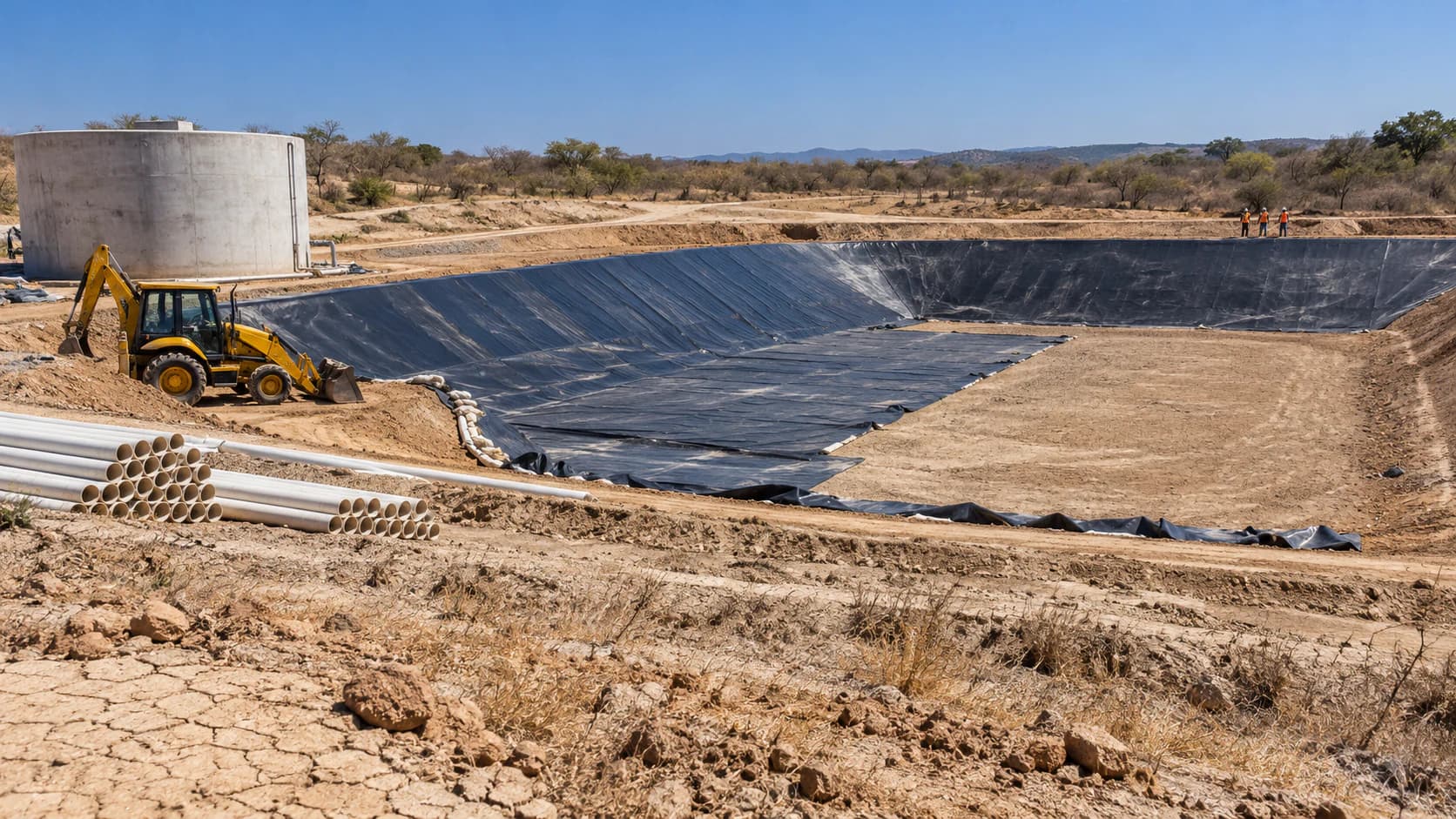
The plan aims for permanent water supply solutions and less reliance on tanker trucks. The Ministry mentions three types of projects:
- Wells: boreholes that tap groundwater.
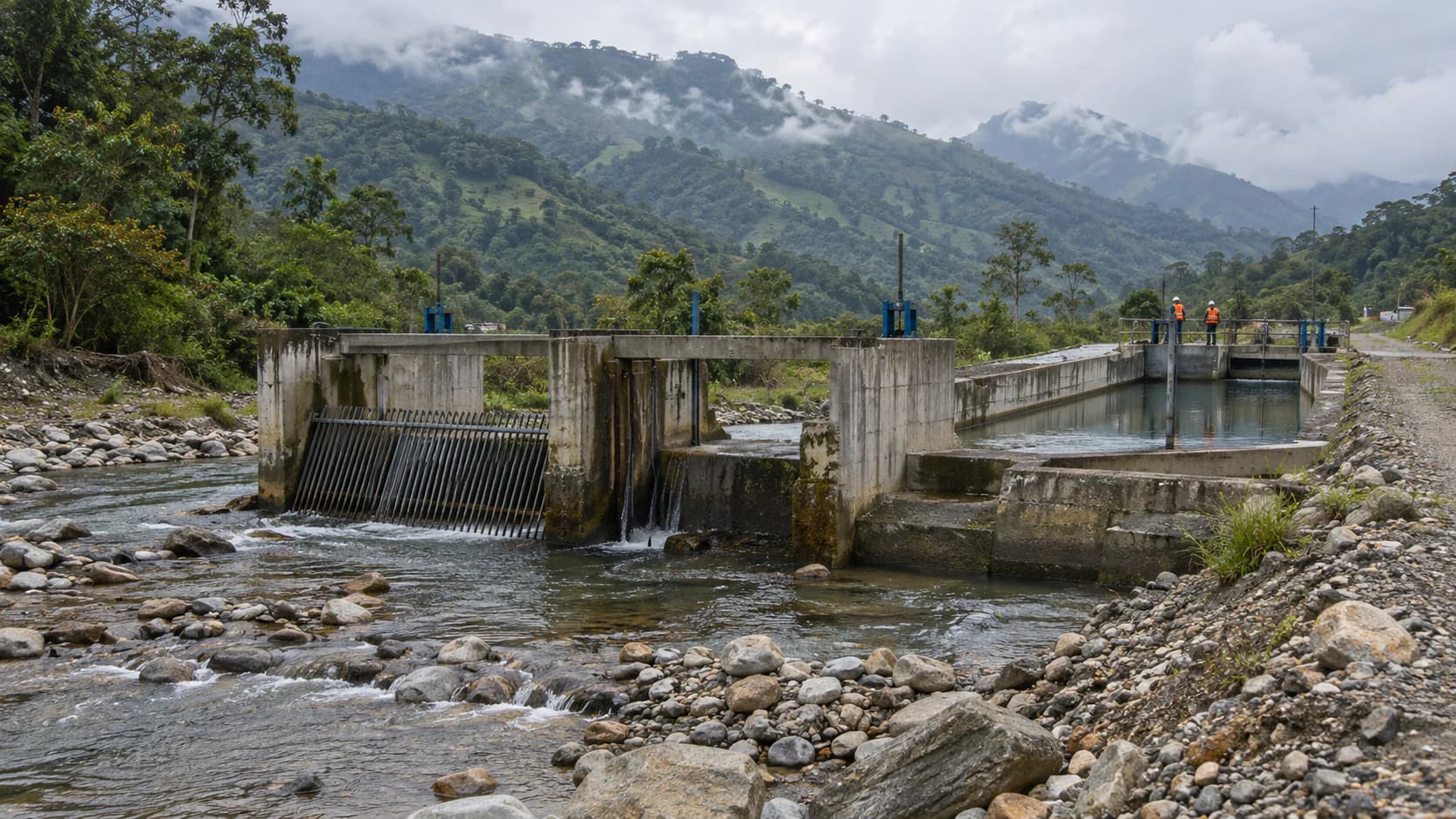
- Water intakes: structures that draw water from a river or stream and carry it into the water supply system.
- Reservoirs: storage basins that hold water for the dry months.
Separately, the department of Cundinamarca received funding for projects of this kind. On October 14, the Ministry and the departmental government announced an additional COP 74.735 billion for 20 water and sanitation projects in 2026, raising the department's investment for the year from COP 397.571 billion to COP 472.306 billion, about 19% more.
| Investment in Cundinamarca | Amount |
|---|---|
| Additional funding for 2026 | COP 74.735 billion |
| Of which, for water supply and sewer systems | COP 65.599 billion |
| Reservoir storing water from the Cuja River to supply Fusagasugá | COP 18.498 billion |
| Drinking water storage tank in Zipaquirá | COP 24.439 billion |
Is there funding for water and sanitation projects?
This is the weak spot. On September 29, before the House of Representatives' Sixth Committee, which covers public utilities among other matters, Minister Jaime Andrés Beltrán said that the sector's investment funds fell from COP 4.7 trillion in 2023 to COP 740 billion in the projected 2027 budget.
In September, at the Andesco annual convention, Beltrán described the size of the gap: of 1,147 water and sanitation projects reviewed, 925 have no funding and would require COP 14.8 trillion. Of the 222 that do have funding, 152 are under construction, worth COP 4.9 trillion, and 70 are suspended.
The minister also warned that budget execution of about 87% does not mean finished projects: much of the money was moved into trust accounts, arrangements in which a financial institution manages a project's funds, without the works being built. The Ministry has asked the Finance Ministry for a gradual budget increase.
What does this mean for public works clients?
For city governments, departments and utilities, the Ministry's signal is clear: the priority is permanent water intake and storage solutions, not tanker trucks. With a tight national budget, each project should arrive with complete studies and designs, so construction can start without last-minute changes.
XIE S.A. built the water supply, sewer system and WWTP for the Florencia Correctional Facility, where WWTP stands for wastewater treatment plant, and Phase VI of the San Bernardo Sewer Master Plan. Learn about our Water and Sanitation unit or contact us.
Sources
- Ministry of Housing, City and Territory: “A joint front to mitigate El Niño in 558 municipalities at risk of water shortages” (October 13, 2026, in Spanish)
- Ideam: official El Niño monitoring page (declaration of October 8, 2026, in Spanish)
- Ministry of Housing, City and Territory: “Cundinamarca will receive an additional COP 74.735 billion for water and sanitation in its municipalities” (October 14, 2026, in Spanish)
- Ministry of Housing, City and Territory: “Ministry proposes a gradual funding increase to revive housing, water and the country's reconstruction” (September 29, 2026, in Spanish)
- Infobae: “Housing Ministry identified 925 unfunded water projects that need COP 14.8 trillion” (September 23, 2026, in Spanish)
- La República: “Housing Ministry found 925 water and sanitation projects without funding” (September 24, 2026, in Spanish)